

Hospitality Property Handover Checklist: What Owners and Operators Must Agree Before Taking Possession.
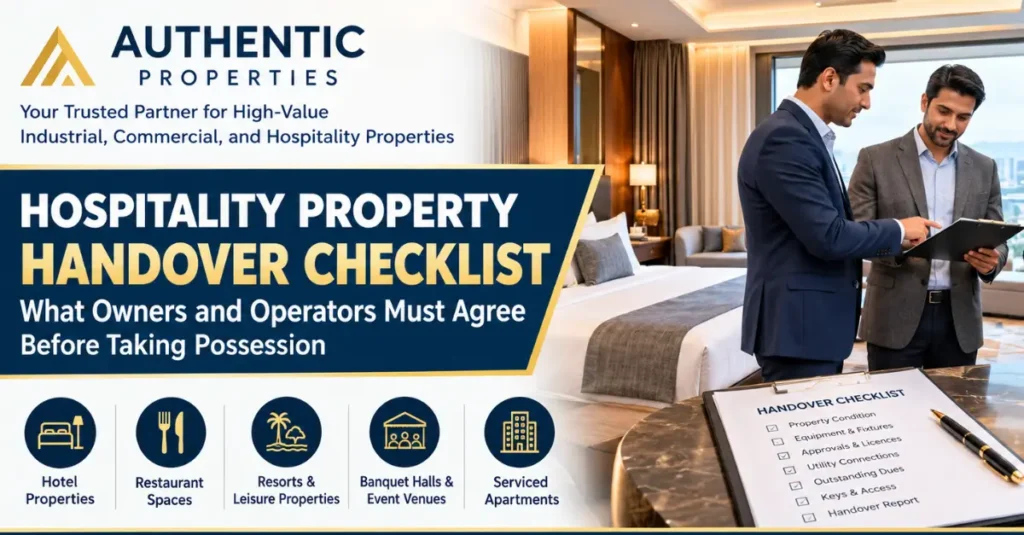
Taking possession of a hotel, restaurant, resort, banquet hall or serviced apartment is a significant milestone in any hospitality transaction. However, signing a lease agreement or completing a property purchase does not automatically mean that the premises are ready for business.
A successful handover requires clarity on the property’s physical condition, existing installations, equipment, utility connections, approvals, outstanding payments and responsibilities of both parties.
For a hospitality operator, overlooking these details can lead to unexpected expenditure, operational delays and disagreements with the property owner. For an owner, an incomplete handover can result in disputes over damage, maintenance obligations and the condition in which the property must eventually be returned.
Whether you are leasing a restaurant space in Hinjawadi, acquiring a running hotel in Pune, or taking possession of a resort in Maharashtra, a structured handover process helps protect both parties.
This guide explains the essential checks that hospitality property owners, investors and operators should complete before taking possession.
1. Confirm Exactly What Is Included in the Handover
One of the first steps is to establish the precise scope of the property being handed over.
A hospitality property may include much more than the building and its rooms. Depending on the transaction, it could contain kitchen equipment, furniture, refrigeration systems, air-conditioning units, electrical installations, generators, lifts, laundry equipment, restaurant fixtures and other operational assets.
Prepare a written inventory covering:
Guest room furniture, beds, wardrobes and fittings.
Restaurant furniture, counters and kitchen installations.
Refrigerators, freezers, cooking equipment and exhaust systems.
Air-conditioning units, electrical panels and backup power equipment.
Water pumps, storage tanks, plumbing fixtures and drainage systems.
CCTV cameras, access-control systems and other installed technology.
Signboards, lighting, decorative fixtures and outdoor furniture.
Record the condition of each significant item and clarify whether it is included in the transaction, excluded, or provided separately under another arrangement.
Where equipment is included, note its make, model, serial number where applicable, operational condition and ownership status.
This inventory reduces the risk of disagreements after possession.
2. Conduct a Detailed Physical Inspection
Never rely exclusively on photographs, marketing material or an earlier site visit.
The incoming operator should inspect the premises with the owner or an authorised representative before accepting possession.
The inspection should cover:
Building structure and interiors
Check visible cracks, seepage, dampness, ceiling damage, flooring, doors, windows, staircases and common areas. Document existing defects rather than assuming that they will be repaired later.
Electrical systems
Verify the condition of distribution panels, wiring, lighting, earthing and the available sanctioned electrical load. Confirm whether the existing capacity can support the proposed hospitality operation.
Plumbing and water supply
Inspect washrooms, kitchen connections, drainage lines, water pressure, pumps, tanks and hot-water systems. For properties with substantial kitchen or laundry requirements, verify whether the infrastructure is adequate for the intended use.
Air-conditioning and ventilation
Test installed equipment and check kitchen exhaust, fresh-air circulation and ventilation arrangements where applicable.
Fire and life-safety installations
Check the visible condition and availability of applicable fire-safety systems, emergency exits, alarms, extinguishers, signage and emergency lighting. Obtain the relevant records and arrange professional verification wherever required.
Prepare a defect list with photographs, the responsible party and an agreed completion date for each outstanding repair.
3. Verify Approvals and Permitted Use
A property that appears suitable for hospitality may not automatically be authorised for every proposed activity.
Before taking possession, confirm that the property’s sanctioned use and applicable permissions are compatible with the intended operation.
Depending on the property, location and business model, the verification may involve:
Approved building plans and applicable occupancy documentation.
Permitted use under the relevant planning and development regulations.
Applicable fire-safety approvals and compliance records.
Water, drainage and electricity connections.
Relevant local trade permissions.
FSSAI registration or licensing requirements for food businesses.
Liquor-related permissions, where the business intends to serve alcohol.
Applicable lift, pollution-control, signage or other operational permissions.
Requirements differ according to the premises, local authority and proposed activity. A hotel, standalone restaurant, banquet venue and resort may have different compliance requirements.
The parties should identify which approvals already exist, which require renewal or modification, and which must be obtained by the incoming operator.
A property consultant can help coordinate the transaction process, but statutory compliance should be verified with the relevant authorities and qualified professionals.
4. Record Meter Readings and Outstanding Dues
Utility and maintenance disputes can arise when responsibility changes from one party to another.
On the handover date, record the readings for electricity, water and any other separately metered services.
Also clarify the status of:
Electricity and water bills.
Common-area maintenance charges.
Property-related dues payable under the agreement.
Society or facility-management charges, where applicable.
Generator fuel or shared utility expenses.
Outstanding payments for services provided to the premises.
The handover statement should specify the date from which the incoming party becomes responsible for the agreed expenses.
If any amount remains outstanding, record who is responsible for payment and the expected settlement date.
5. Agree on Repairs, Fit-Outs and Pending Work
A hospitality property may require substantial preparation before it can begin operations.
A restaurant might need kitchen equipment, exhaust arrangements and dining-area modifications. A hotel may require room upgrades, furniture replacement, additional electrical capacity or changes to guest facilities.
Before possession, prepare a written schedule of pending work.
For every item, identify:
The work to be completed.
The party responsible for arranging and paying for it.
The expected completion date.
Whether written approval is required.
Whether the work affects the possession date or rent commencement.
Whether any permissions are needed before execution.
For example, if a restaurant tenant agrees to install a commercial kitchen, the parties should clarify the permitted installation locations, exhaust route, electrical capacity, structural limitations and responsibility for obtaining approvals.
Do not rely solely on verbal assurances that essential work will be completed after possession.
6. Clarify Rent Commencement and the Fit-Out Period
For leased hospitality properties, the possession date and the date on which rent becomes payable may not necessarily be the same.
The agreement should clearly establish:
The date of possession.
Any agreed rent-free fit-out period.
The date from which rent becomes payable.
The security deposit and payment schedule.
The applicable maintenance and utility charges.
The rent escalation provisions.
The responsibilities during the fit-out period.
The treatment of delays caused by incomplete owner obligations.
These points are particularly important when an operator is investing in kitchen equipment, guest-room interiors, furniture, signage or other installations before opening.
A clearly documented commencement schedule can prevent misunderstandings and help the operator plan the opening budget more accurately.
7. Document Keys, Access and Security Systems
A hospitality property may have several access points and operational areas.
The handover record should cover all relevant keys, access cards, remote controls, security codes and authorised access arrangements.
Depending on the property, this may include:
Main entrance and emergency exits.
Guest rooms and service areas.
Kitchen and storage areas.
Electrical and utility rooms.
Staff entrances and loading areas.
Parking and common facilities.
CCTV and access-control systems.
Passwords, administrator access and system ownership should be transferred securely wherever applicable.
For a property that was previously operational, also clarify whether former employees, vendors or contractors retain access to any part of the premises.
8. Establish the Condition of the Property Through Photographs
Photographic documentation provides a useful record of the premises at the time of possession.
Capture dated photographs or videos of guest rooms, washrooms, kitchens, dining areas, floors, ceilings, walls, furniture, equipment, utility areas and external spaces.
Pay particular attention to existing damage, stains, broken fixtures, equipment defects and incomplete work.
Attach the photographs to the handover report or maintain a clearly organised digital record acknowledged by both parties.
This is especially valuable when the lease agreement requires the tenant to return the premises in a specified condition at the end of the tenancy, subject to the agreed terms and ordinary wear and tear.
9. Prepare a Formal Possession and Handover Report
A structured handover report brings all the checks together in one document.
The report should ordinarily record:
Full property address and identification.
Owner and incoming operator or tenant details.
Relevant agreement date and possession date.
Property condition and outstanding defects.
Inventory of furniture, fixtures and equipment.
Utility meter readings.
Keys and access items handed over.
Documents and records provided.
Pending repairs and agreed deadlines.
Outstanding dues and payment responsibilities.
Any agreed exceptions or unresolved matters.
Signatures of the authorised representatives.
The report should be consistent with the signed transaction documents. If any issue changes the agreed obligations, the parties should document it through an appropriate written amendment rather than relying on an informal handover note.
10. Understand the Difference Between Property Handover and Business Handover
This distinction is particularly important when taking over an existing hotel, restaurant or other operating hospitality business.
A property lease or sale does not automatically include the business itself.
The parties should establish whether the transaction covers only the premises or also includes assets such as furniture, equipment, inventory, business records, branding rights or other agreed components.
If the transaction involves an operating business, separately clarify the treatment of employees, supplier arrangements, customer bookings, deposits, contracts, licences and other obligations, as applicable.
The transferability of licences, registrations, contracts and other rights must be checked individually. They should not be assumed to transfer automatically with the property.
Where an operating business is being acquired, obtain appropriate legal, financial and operational advice before completing the transaction.
Common Hospitality Property Handover Mistakes to Avoid
Even experienced property owners and operators can overlook important details when working toward a tight opening deadline.
Avoid these common mistakes:
Accepting possession without a written condition report.
Assuming all furniture and equipment are included.
Failing to record electricity and water meter readings.
Taking verbal commitments for pending repairs.
Assuming existing approvals cover the proposed business.
Starting fit-out work without checking permissions.
Leaving rent commencement or maintenance responsibilities unclear.
Confusing a property transaction with the acquisition of an operating business.
Failing to record outstanding defects before signing the handover acknowledgement.
A few additional checks before possession can prevent substantial time, cost and operational disruption later.
How Authentic Properties Can Help With Hospitality Property Transactions
Finding the right hospitality property involves more than identifying an attractive building. The premises must suit the proposed business, location strategy, operating requirements and commercial objectives.
Authentic Properties assists clients with hospitality real estate requirements across Pune and surrounding markets, including:
Hotels and boutique hotels for sale or lease.
Restaurant spaces and food-and-beverage properties.
Resorts and leisure properties.
Banquet halls and event venues.
Serviced apartments and hospitality-oriented assets.
Hospitality property sourcing for investors and operators.
Property shortlisting, site visits and transaction coordination.
Whether you are a hospitality operator searching for a suitable property or an owner planning to lease or sell a hospitality asset, a structured transaction process can help both parties move forward with greater clarity.
Conclusion: Make the Handover as Carefully as the Deal
A successful hospitality property transaction should not end with the exchange of keys. It should conclude with a clear understanding of the property’s condition, included assets, applicable permissions, outstanding work, utility responsibilities and the obligations of both parties.
For owners, a documented handover protects the property’s condition and creates a clear record. For incoming operators, it helps establish what is being received and what remains to be completed before operations begin.
Taking time to complete these checks can make the transition into a new hotel, restaurant, resort or banquet property more organised and predictable.
Looking to Buy, Sell or Lease a Hospitality Property in Pune?
Authentic Properties helps hospitality investors, operators and property owners explore suitable opportunities across Pune and surrounding markets.
Whether you are searching for a restaurant space, leasing a hotel, acquiring a resort or marketing a hospitality asset, we can assist with property shortlisting and transaction coordination.
Contact Authentic Properties
Authentic Properties
Your Trusted Partner for High-Value Industrial, Commercial, and Hospitality Properties
📱 Mobile: 9822148521
☎️ Office: 020-24477221
📧 Email: consult@authenticproperties.co.in
🌐 Website: https://authenticproperties.co.in/
Have a hospitality property to lease or sell, or a specific requirement to fulfil? Contact our team to discuss your property requirement.